

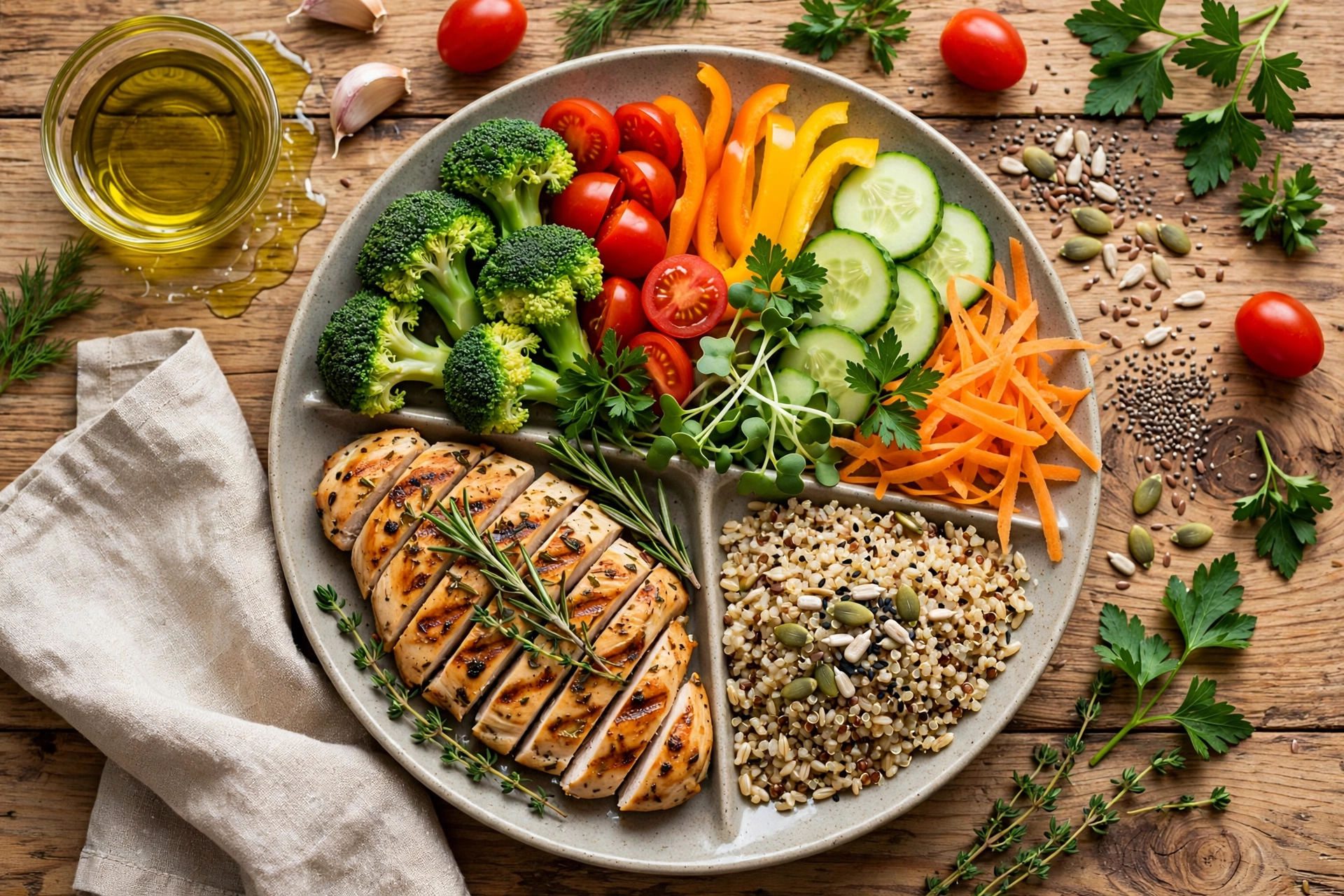
Forget complicated diet rules and expensive superfoods. If you are wondering what is a balanced diet, the real answer is refreshingly simple: eating a wide variety of foods, in roughly the right proportions, most of the time. This beginner’s guide explains the food groups, an easy way to build your plate, and small swaps that make a real difference without making you miserable.
What Is a Balanced Diet Made Of?
A balanced diet is built from five main food groups, and your body needs something from each of them.
Fruit and vegetables provide vitamins, minerals and fibre. Aiming for at least five portions a day is the classic guidance, and variety matters, so mix colours and types rather than eating the same two things forever. Fresh, frozen and tinned all count, which is good news for your budget.
Starchy carbohydrates, such as bread, rice, pasta, potatoes and cereals, give you energy. Choosing wholegrain versions where you can adds fibre, which helps digestion and keeps you feeling full for longer.
Protein helps your body build and repair itself. It comes from meat, fish and eggs, but also from beans, lentils, chickpeas, nuts and tofu, which are often cheaper and just as useful.
Dairy and alternatives, such as milk, cheese, yoghurt and fortified plant-based versions, provide calcium for bones and teeth.
Healthy fats, from foods like olive oil, oily fish, nuts, seeds and avocados, are needed in small amounts. Fat is not the enemy; the type and the quantity are what matter.
The Simple Plate Method
If counting and weighing sounds exhausting, use your plate as the guide instead. As a simple visual method, imagine half your plate filled with vegetables or salad, one quarter with protein, and one quarter with starchy carbohydrates.
This one picture does most of the work of a balanced diet without a single app or chart. It automatically increases your vegetables, keeps portions of richer foods sensible, and works with almost any cuisine in the world, from a British roast to a curry or a stir-fry.
Do Not Forget Water
A balanced diet includes what you drink, not just what you eat. Water is the best everyday choice, and thirst is a reasonable guide for most healthy adults. Sugary fizzy drinks and large amounts of fruit juice add a lot of sugar with very little nutrition, so they fit best as occasional treats rather than daily habits.
What About Ultra-Processed Foods?
Foods like crisps, sweets, processed meats and many ready meals are usually high in salt, sugar and unhealthy fats, and easy to overeat. A balanced diet does not ban them completely, because a diet you hate is a diet you quit. It just keeps them in their place: occasional, in modest portions, rather than the base of every meal.
Simple Swaps That Actually Help
Small changes add up over months. Swap white bread for wholemeal, sugary cereals for plain oats with fruit, and one fizzy drink a day for water. Choose grilled or baked over deep-fried when you can. Add an extra vegetable to meals you already like, such as peppers and onions in a pasta sauce or lentils in a curry.
You do not need a fad diet with a name, a detox, or a cupboard of supplements. Variety, sensible portions, the plate method and mostly whole foods will carry you a very long way.
This article is general information only and is not medical or dietary advice. If you have a health condition, are pregnant, or need a personalised eating plan, please speak to a doctor or a registered dietitian.

4 Comments
Pingback: What Is BMI and How Is It Calculated? Explained Simply - CFC Daily
Pingback: How Long to Boil an Egg: Times for Soft, Medium and Hard Boiled - CFC Daily
Pingback: How Many Calories in an Egg? Boiled, Fried and Scrambled Compared - CFC Daily
Pingback: How to Improve Eyesight Naturally: Habits, Foods and Exercises That Help - CFC Daily