

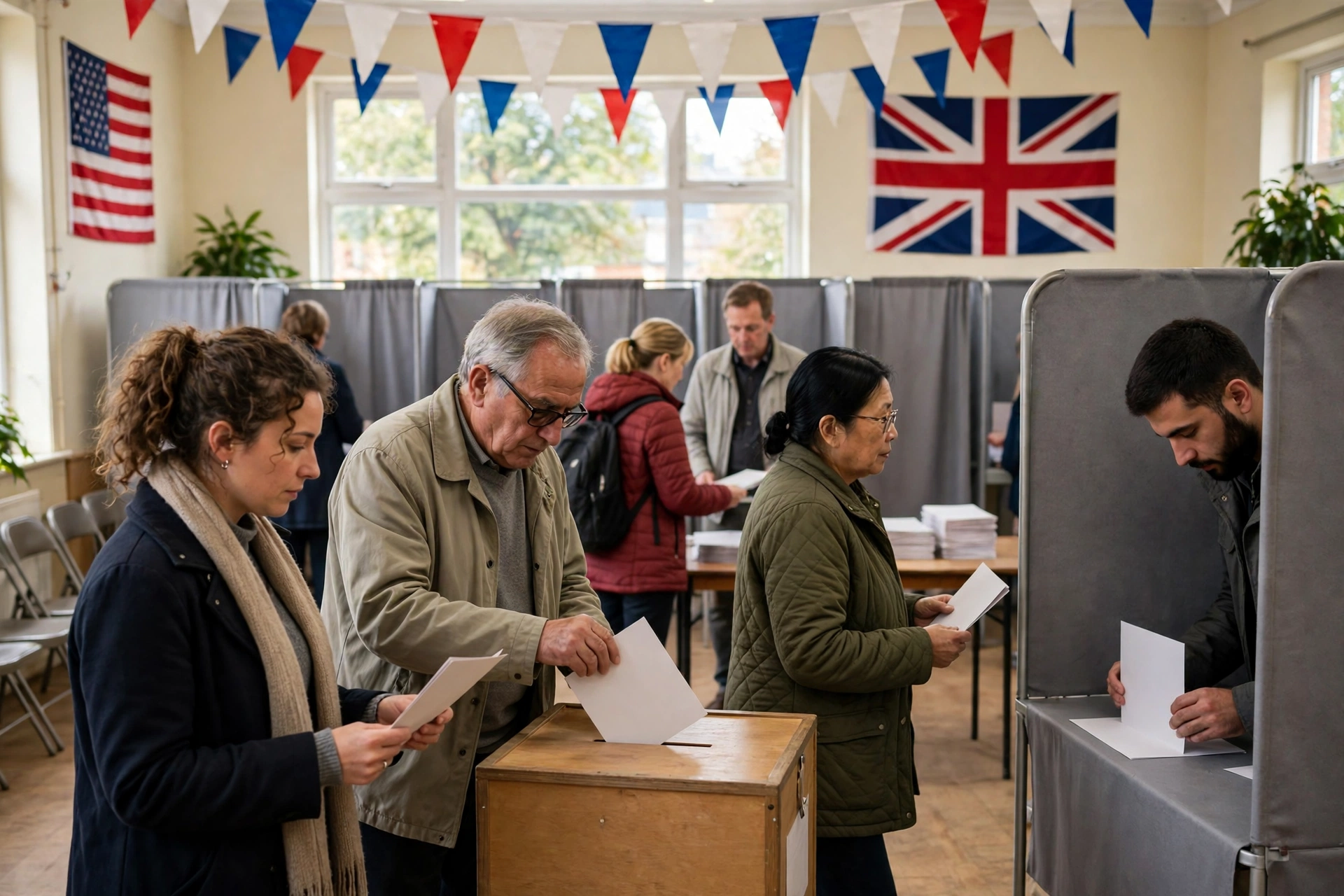
Have you ever wondered how often are elections held, and why the answer is so different depending on where you live? In the United Kingdom, election dates can move around, while in the United States they follow a strict calendar that never changes. This simple guide explains both systems side by side, so you always know when the next big vote is coming.
How Often Are Elections Held in the UK?
In the UK, a general election must be held at least once every five years. A general election is when voters across the whole country choose their Members of Parliament, and the party that wins the most seats usually forms the government, with its leader becoming Prime Minister.
Unlike the US system, the five-year rule is a maximum, not a fixed date. The Prime Minister can call a general election earlier than five years if they think the timing is right, which is why British elections sometimes arrive as a surprise. Voters may also hear about the date only a few weeks before polling day.
On top of general elections, the UK holds local elections for councils that run services like bins, roads and local planning. These do not all happen on the same cycle. Many councils hold elections every four years, some elect a portion of their councillors more often, and different parts of the country vote in different years. There are also elections for devolved governments in Scotland, Wales and Northern Ireland, which run on their own timetable.
How Often Are Elections Held in the USA?
The United States uses a fixed federal cycle that is written into its constitution, so everyone knows the dates years in advance. Federal elections are held every two years, always in November, but what is being elected changes each time.
Members of the House of Representatives serve two-year terms, so every seat in the House is voted on every two years. Senators serve six-year terms, and to keep things steady, only about a third of the Senate is elected in each two-year cycle. The President serves a four-year term, so a presidential election takes place every four years.
When a federal election falls in the middle of a President’s term, Americans call it the midterms. Midterm elections decide the whole House of Representatives and a third of the Senate, and they are often seen as a public verdict on how the President is doing. A President’s party often loses seats in the midterms, which can change who controls Congress for the rest of the term.
What About By-Elections and Special Elections?
Both countries sometimes need an extra election outside the normal cycle. In the UK this is called a by-election. It happens when a seat in Parliament becomes empty, for example if an MP resigns or passes away, and only voters in that one area take part.
The USA has the same idea under a different name: a special election. States hold special elections to fill an empty seat in the House or Senate until the next regular election. These smaller contests do not change the overall calendar, but they can still matter when Parliament or Congress is closely divided.
If you want to understand the buildings and chambers these elections fill, our explainer on the difference between the UK Parliament and the US Congress is a good place to start.
The Key Difference in One Sentence
The simple takeaway is this: the UK must hold a general election at least every five years but can hold one sooner, while the USA votes on a fixed rhythm of two, four and six-year terms that never moves. One system values flexibility, the other values predictability, and both give voters regular chances to have their say.
