

How Much Water Should You Drink a Day? Start With the Famous Rule
Almost everyone has heard the advice to drink eight glasses of water a day, so it is natural to ask: how much water should you drink a day, really? The honest answer is that there is no single perfect number for every person. The eight-glasses rule is best seen as an easy-to-remember guide rather than a strict medical law. For many healthy adults, drinking around that amount, spread across the day, is a reasonable target. But your personal needs can be higher or lower depending on your body, your lifestyle and even the weather outside your window.
Why Your Needs Are Not the Same as Everyone Else’s
Several things change how much water your body uses. Bigger bodies generally need more water than smaller ones. Exercise makes you sweat, and every drop of sweat must be replaced. Hot or humid weather has the same effect, while a cool day spent sitting indoors loses far less. Illness can raise your needs too, especially fever, vomiting or diarrhoea. Even your diet matters: salty and high-protein foods can make you thirstier. This is why fixed rules often fail people, and why paying attention to your own body is smarter than obsessing over a glass count.
Do Not Forget the Water in Your Food
Here is a fact that surprises many people: a good share of your daily water does not come from a glass at all. Food provides a meaningful part of it. Fruits such as oranges, melons and strawberries are mostly water, vegetables like cucumber and lettuce are full of it, and everyday meals including soups, rice, yoghurt and even bread all contribute. Tea, coffee and milk also count towards your fluid intake. Caffeinated drinks do have a mild drying effect, but in normal amounts they still add more water than they take away, so your morning cup of tea is not working against you.
Let Thirst Be Your Everyday Guide
For most healthy adults, thirst is a surprisingly good guide. If you drink when you are thirsty and a little extra around meals and activity, you will usually be fine. A simple check is the colour of your urine: pale yellow generally means you are well hydrated, while dark yellow or amber is a sign to drink more soon. Older adults sometimes feel less thirst, so they may benefit from drinking on a gentle schedule rather than waiting. Children, athletes and people working outdoors in heat should also be more deliberate about regular drinks.
Signs You Might Be Dehydrated
Mild dehydration can creep up quietly. Common signs include a dry mouth, tiredness, a headache, dizziness, dark urine and finding it hard to concentrate. If you notice several of these, drink some water and rest, and you will often feel better quickly. More serious signs, such as confusion, a very fast heartbeat, or not passing urine for many hours, need prompt medical attention rather than home remedies.
Easy Ways to Drink a Little More
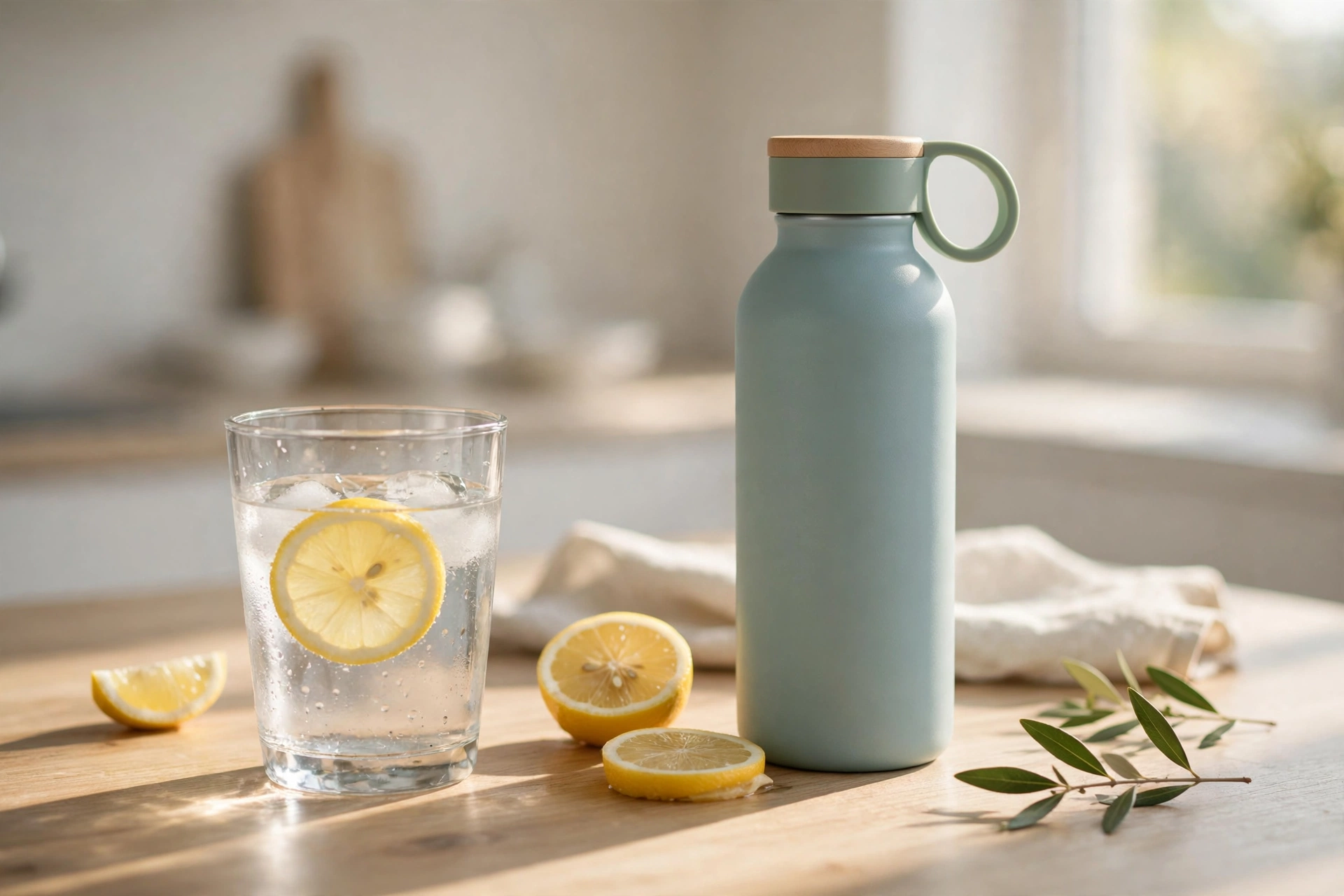
If you know you tend to forget, small habits help more than willpower. Keep a bottle of water where you can see it, at your desk, in your bag or by the sofa. Drink a glass of water with every meal, and one when you wake up. Choose water with meals out, add a slice of lemon or cucumber if plain water bores you, and eat water-rich foods at lunch. On exercise days, drink before, during and after your workout. Little and often beats forcing down a huge amount at once.
This article is general information only and is not medical advice. If you have a health condition, take regular medication, or are worried about your fluid intake, talk to your doctor or another qualified health professional.
