

Almost everyone has heard the rule that you should drink eight glasses of water a day. Fewer people know where that rule came from, and the honest answer is that it was never a strict scientific finding. So how much water should you actually drink a day? The real answer depends on your body, your activity, the weather and even what you eat, but there are sensible targets that work for most healthy adults.
How Much Water Do You Actually Need?
Health authorities give slightly different figures, but they point the same way. European guidance suggests a total water intake of about 2 litres a day for women and 2.5 litres for men, from all food and drink combined. In the UK, the Eatwell Guide suggests around 6 to 8 glasses of fluid a day, which covers water, tea, coffee, milk and other drinks.
The key phrase is total water. You do not need to drink all of it as plain water from a bottle. A large share, often around a fifth to a third, normally comes from food. Fruit, vegetables, soups, yoghurt, rice and even bread all contain water, and every hot drink you have during the day counts towards the total too.
Is Thirst a Good Enough Guide?
For most healthy adults, yes, most of the time. Thirst is the body’s built-in signal, and drinking when you feel thirsty, plus drinking with meals, covers the needs of a typical day for a typical person. You are also likely to be fine if your urine is a pale straw colour. Dark, strong-smelling urine is a practical sign that you could do with drinking more.
There are exceptions. Older adults often feel thirst less strongly, so drinking regularly through the day matters more than waiting to feel thirsty. You also need more than usual in hot weather, during exercise, when you are ill with fever or an upset stomach, and during pregnancy or breastfeeding.
Signs You May Not Be Drinking Enough
Mild dehydration creeps up quietly. Headaches, tiredness, dry mouth, difficulty concentrating and constipation can all be early signs, and they are easy to blame on other things. If you regularly reach the evening realising you have barely drunk anything since breakfast, a visible routine helps: a glass of water with each meal, one mid-morning and one mid-afternoon is enough for most people.
Can You Drink Too Much Water?
It is possible but uncommon. Drinking very large amounts of water in a short time can dilute the salts in the blood to dangerous levels, a condition linked mostly to extreme endurance events and strict forced-drinking challenges, not to normal daily habits. For everyday life, the far bigger risk for most people is drinking too little rather than too much. Spreading your intake through the day, rather than downing litres at once, is the sensible pattern.
Simple Ways to Drink Enough
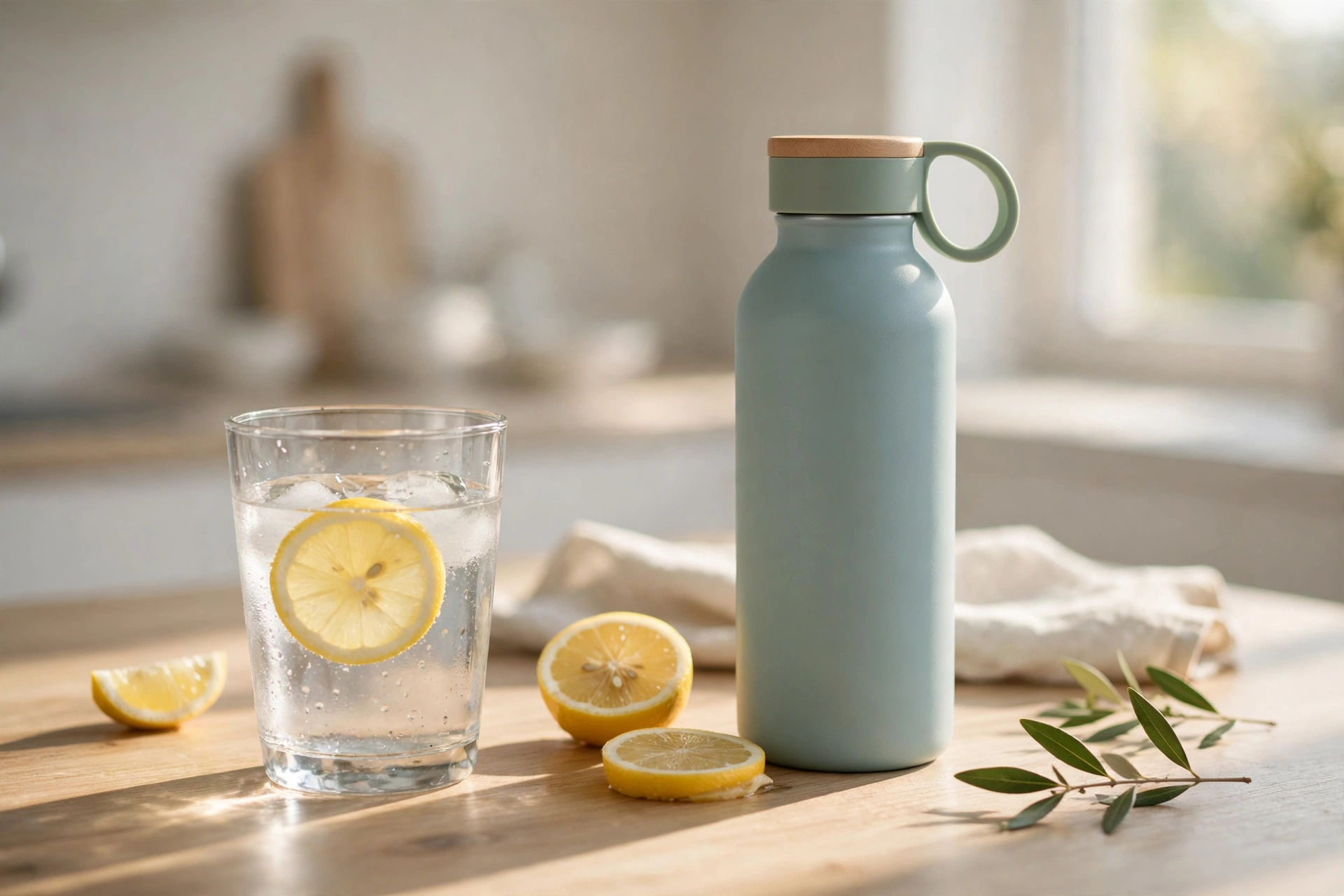
Keep water where you can see it, such as a bottle on your desk, and refill it rather than treating it as a one-off task. Add flavour with a slice of lemon or cucumber if plain water bores you. Drink a glass when you wake up, because you have had nothing for hours overnight, and pair drinks with habits you already have, like making tea or brushing your teeth. On days when you exercise or the weather is hot, take extra with you rather than catching up afterwards.
The eight-glasses rule is best treated as a rough reminder, not a target to stress about. Aim for regular drinks through the day, let thirst and the colour of your urine guide you, and increase your intake when heat, exercise or illness demands it.
This article is general information only and is not medical advice. If you have a kidney, heart or other condition that affects how much fluid you should drink, or you are worried about your hydration, please speak to a qualified health professional.
