

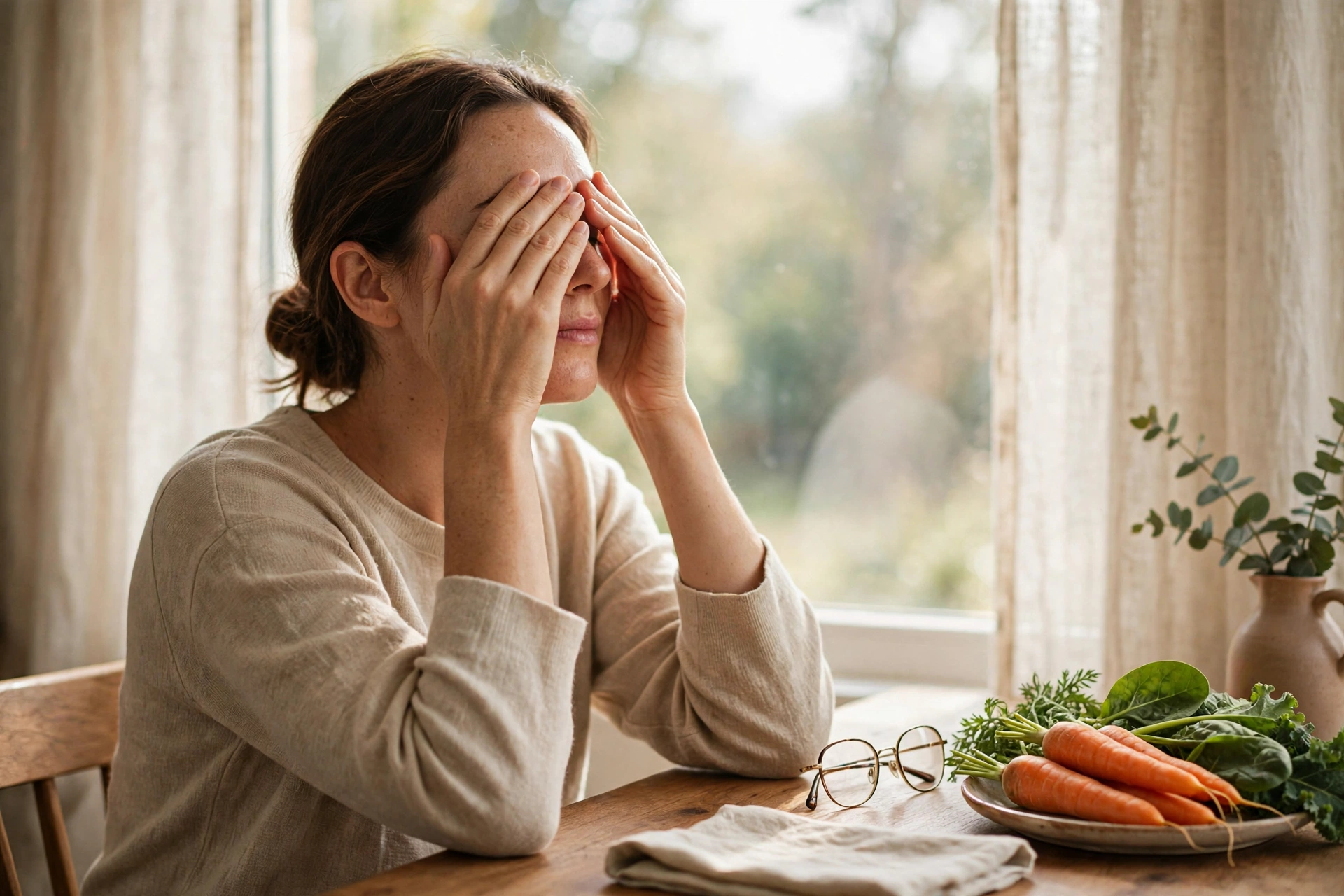
If you want to know how to improve eyesight naturally, the honest answer comes first: no food, exercise or home remedy can change the shape of your eye or undo the need for glasses if you have a focusing error such as short-sightedness. What natural methods can do is real and worthwhile, though. They protect the eyes you have, slow down avoidable damage, ease the strain and dryness that make vision feel worse than it is, and support the health of the retina for the long term. This guide covers the habits that genuinely help, and the point at which only a professional can.
Eat Foods That Support Your Eyes
Your eyes use specific nutrients heavily, and a diet short on them leaves the retina less protected. Vitamin A is essential for night vision, and your body makes it from the beta-carotene in carrots, sweet potatoes, pumpkins and other orange vegetables. Two less famous nutrients, lutein and zeaxanthin, gather in the centre of the retina and act like internal sunglasses; they come from spinach, kale and other dark leafy greens, and from egg yolks. Omega-3 fats from oily fish such as salmon, mackerel and sardines support the surface of the eye and help with dryness, and vitamin C from citrus fruit, peppers and berries supports the small blood vessels that feed the eye.
None of this requires supplements or special products. It is the same pattern described in our beginner’s guide to what a balanced diet is: mostly plants, some oily fish, variety across the week. Your eyes simply give you one more reason to eat that way.
Use the 20-20-20 Rule for Screens
Much of what people describe as worsening eyesight is actually eye strain from screens. When you stare at a screen you blink far less often than normal, your eyes dry out, and the focusing muscle stays locked at one distance for hours, which leaves vision feeling blurred and tired by evening.
The standard remedy is the 20-20-20 rule: every 20 minutes, look at something at least 20 feet away (about 6 metres) for at least 20 seconds. It takes less than half a minute, relaxes the focusing muscle and restarts a normal blink rate. Working in decent light, keeping the screen an arm’s length away and slightly below eye level, and matching screen brightness to the room all reduce the same strain.
Eye Exercises: What They Can and Cannot Do
Eye exercises are widely promoted online, and their real value is modest but genuine. Gentle movements such as slowly rolling the eyes, shifting focus between a finger held close and a point across the room, and palming (resting your closed eyes under warm palms for a minute) can relax tired eye muscles and relieve the ache of a long screen day. Many people find them comforting, and they do no harm.
What they cannot do is retrain the eye out of short-sight, long-sight or astigmatism, because those are matters of the eye’s shape and length, not of muscle fitness. Treat any programme that promises to throw away your glasses with exercises alone as a sales pitch, not a health claim.
Sleep, Daylight and Protection
Eyes recover during sleep, and chronically poor sleep shows up as dryness, twitching eyelids and difficulty focusing, so regular rest is an eye habit too. Time outdoors in daylight matters especially for children: studies consistently link more outdoor time with a lower chance of developing short-sightedness, one of the few lifestyle findings eye doctors repeat often. For adults, the outdoor rule is protection rather than improvement: sunglasses that block UV light, worn in bright sun, reduce the long-term risk of cataracts and other sun-related damage, and safety glasses for grinding, gardening chemicals or DIY prevent the injuries that damage more eyes than any disease of slow decline. Not smoking also belongs on this list, since smoking raises the risk of cataracts and macular degeneration.
When Natural Methods Are Not Enough
Some changes should never be handled with habits and hope. See an eye specialist promptly for sudden vision loss or blurring, flashes of light or a shower of new floaters, eye pain, a shadow across your vision, or any rapid change in one eye. Have regular eye tests even when your vision feels fine, because a test checks the health of the eye as well as the prescription, and conditions such as glaucoma cause no symptoms until damage is done. Glasses and contact lenses are not a failure of natural living; they are the correct tool for a focusing problem.
Improving eyesight naturally means looking after your eyes properly: the right foods, breaks from screens, sleep, daylight and protection, plus regular checks. Do those consistently and you give your vision its best chance of staying clear and comfortable for life.
This article is general information only and is not medical advice. If you are worried about your eyes or notice changes in your vision, please see a qualified eye care professional.
