

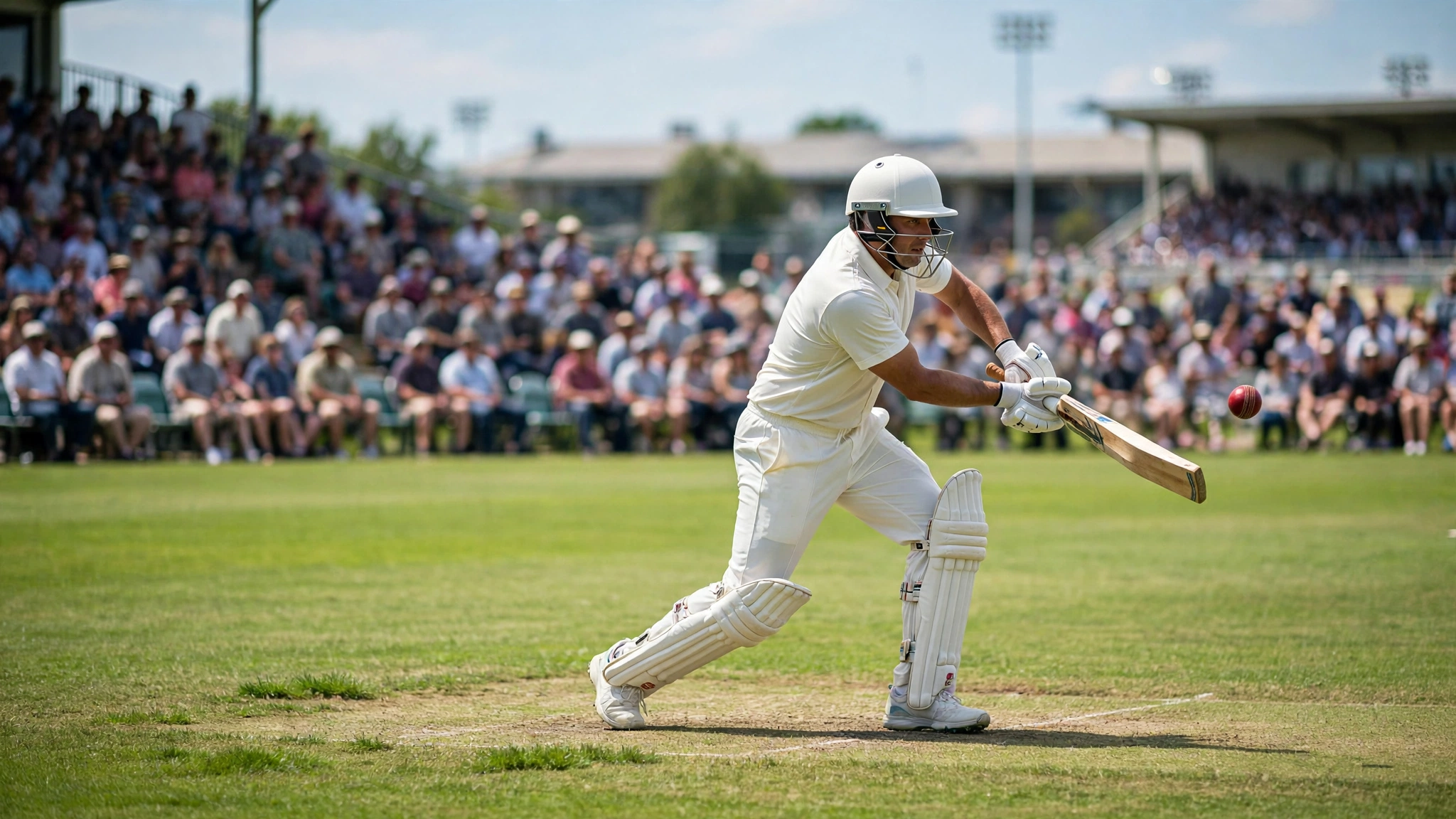
There are 11 players in a cricket team. That number is the same in every official format of the game, from a five-day Test match to a Twenty20 that is over in three hours, and it has been fixed since the Laws of Cricket were first written down in 1744. A match therefore involves 22 players in total, 11 per side. This guide explains what those 11 players actually do, how the numbers work during play, when substitutes are allowed, and why tournament squads are bigger than the team that takes the field.
What Do the 11 Players Do?
A cricket team’s 11 is a blend of specialists. Typically it contains five or six specialist batters, whose job is scoring runs; three or four specialist bowlers, who deliver the ball and try to take wickets; one or two all-rounders, who contribute with both bat and ball; and one wicketkeeper, who stands behind the stumps wearing gloves and is also expected to bat. One of the 11 is the captain, who makes the tactical decisions: who bowls, where fielders stand and whether to bat or bowl first after winning the toss.
When a team is batting, only two of its 11 are on the pitch at once, one at each end. The other nine wait for their turn, and the innings ends when ten of them are out, because the eleventh has nobody left to bat with. When the same team fields, all 11 are out on the ground together: the bowler, the wicketkeeper and nine fielders spread around the field. So the number of players actively involved changes through the match, but the team size never does.
How Many Players Are on the Field at Once?
During play there are 13 of the 22 on the field: the full fielding side of 11, plus the two batters. That is one reason cricket fields are so large: 11 fielders still cannot cover every gap on a big oval, which is exactly the space batters score into. The balance between bat and ball that makes cricket work, as our guide to the differences between Test, ODI and T20 cricket explains, rests on this fixed number. Change it to 12 and scoring would dry up; reduce it to 10 and bowlers would have nowhere to hide.
Squads Are Bigger Than Teams
Eleven is the match number, not the size of a club or national squad. For a World Cup or a Test series, teams name squads of around 15 players, and sometimes more for long tours, so that injuries, illness and changes in conditions can be covered. League franchises carry even bigger squads across a season; India’s IPL squads, for example, run to well over 20 players. From that squad, a fresh playing 11 is selected for each match, and the players left out that day have no part in the game at all unless a special replacement rule applies.
Substitutes and Replacements
Cricket’s substitute rules are stricter than football’s. A substitute fielder may come on for a player who is injured or ill and field in their place, but traditionally that substitute is not allowed to bat, bowl or keep wicket: they are a stand-in body in the field, nothing more. The original player can return once fit.
One modern exception matters: concussion replacements. Since 2019, international cricket has allowed a like-for-like replacement for a player with a concussion, and that replacement can bat and bowl fully, because head injuries are treated as a safety issue rather than a tactical one. Some domestic leagues go further: the IPL uses an Impact Player rule that lets a team swap one player during the match, effectively using 12 players, but that is a league innovation, not part of the Laws of the game worldwide.
Does the Number Ever Change?
In informal cricket, constantly: park and beach games run happily with six, eight or ten a side, and indoor cricket is played with smaller teams on a court. At the official level, though, the answer is no. Women’s cricket uses exactly the same 11-a-side format, as do age-group internationals. A team that cannot put 11 players on the field at the start because of genuine emergencies can sometimes begin short-handed under local playing conditions, but the standard everyone plans around is 11.
So if you are settling in to watch a match, the maths is simple: 11 players per team, 22 in the match, 13 on the field at any moment, and a squad of reserves behind them. The number has survived nearly three centuries of change in everything else about the sport, which suggests the balance it creates is very hard to improve.
