

What Is Cricket in One Minute?
So, what is cricket? In short, it is a bat-and-ball game between two teams of eleven players. One team bats and tries to score runs, while the other team bowls and fields, trying to stop the runs and get the batters out. When ten batters are out, the teams swap roles, and the side with the most runs at the end wins. Think of it as a cousin of baseball that went travelling: it began in England centuries ago and is now watched by hundreds of millions of fans worldwide.
The Basics, in Baseball Terms
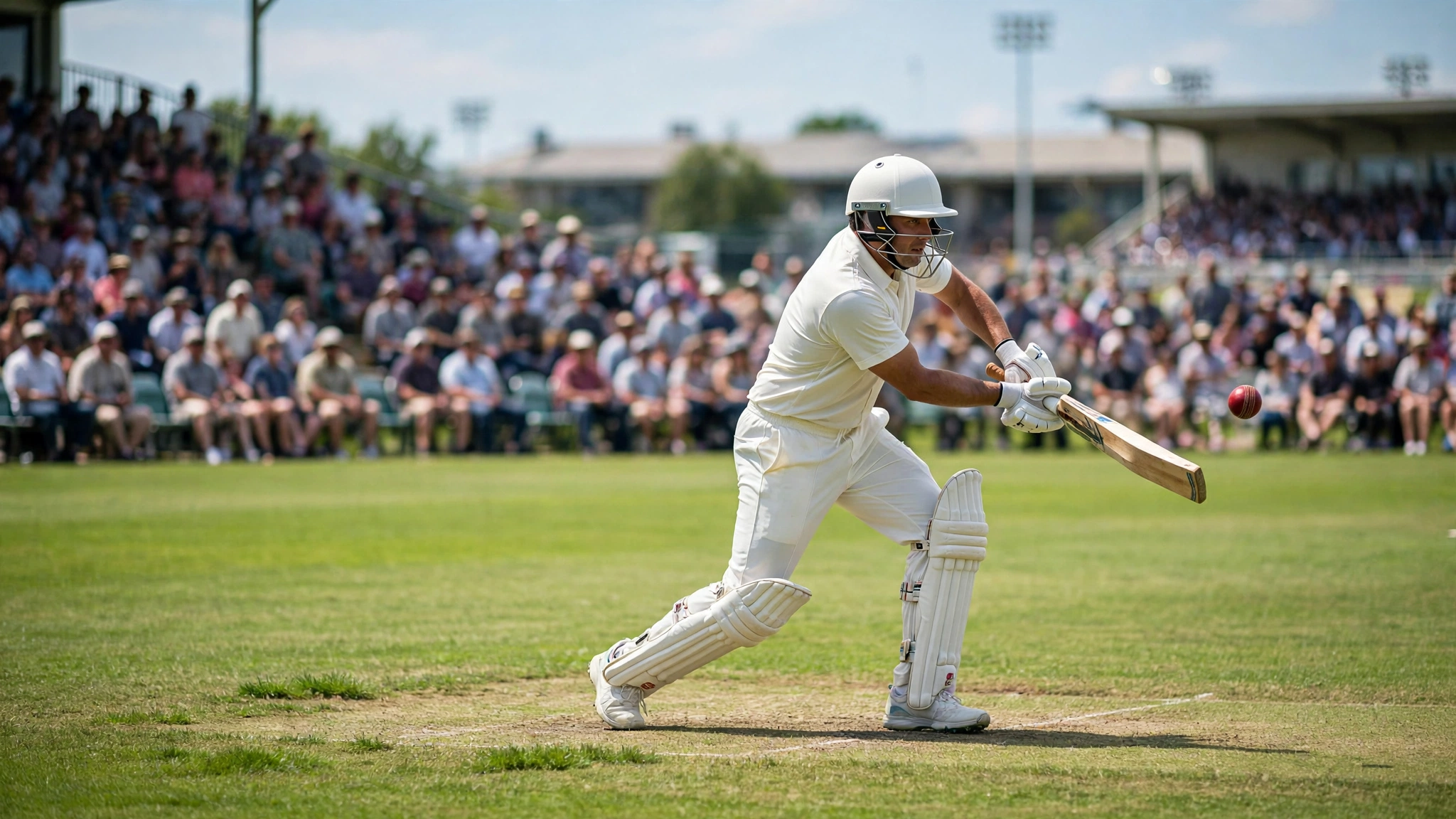
Imagine a baseball diamond stretched into a long rectangle. In the middle sits the pitch, a flat strip of ground. At each end stands a wicket: three wooden sticks, called stumps, with two small pieces of wood resting on top. The bowler, cricket’s version of the pitcher, runs in and delivers the ball towards the batter, bouncing it once off the pitch. The batter stands in front of the wicket and protects it with a flat wooden bat, while also trying to hit the ball away to score.
There are two batters on the field at the same time, one at each end. When one of them hits the ball, both can run to the opposite end. Each completed swap counts as one run, a bit like advancing a base, except they can run as many times as they dare before the fielders return the ball. If a batter hits the ball all the way to the rope around the field, that is worth four runs automatically. If the ball flies over the rope without bouncing, it is a six, cricket’s home run moment, and the crowd goes wild.
How Batters Get Out
Getting out is called losing a wicket, and there are several ways it happens. The bowler can bowl the batter out by hitting the stumps with the ball. A fielder can catch the ball in the air, just like baseball. A batter can also be run out while sprinting between the wickets if the fielders break the stumps with the ball first. There is also LBW, short for leg before wicket, where the umpire decides the ball would have hit the stumps if the batter’s leg had not blocked it. Each team has ten wickets to lose, so when you hear that a team is “120 for 4”, it means they have scored 120 runs and lost four batters.
Overs: How the Game Is Organised
Cricket does not count pitches one by one like baseball. Instead, deliveries are grouped into overs, and one over is six balls bowled by a single bowler from one end. Bowlers then take turns, and they cannot bowl two overs in a row. This rule shapes the whole game, because captains must plan which bowler to use at each moment, like a baseball manager planning pitching changes.
The Three Formats: Five Days or Three Hours
Cricket famously comes in three sizes. Test cricket is the original long form: matches last up to five days, each team usually bats twice, and it rewards patience and stamina. One Day Internationals, or ODIs, give each team 50 overs, so a match lasts about eight hours. Then there is T20, the shortest and loudest format, where each team gets just 20 overs and the whole match finishes in roughly three hours, similar to a baseball game. Most new fans start with T20 because it is fast, colourful and full of big hits.
Why Cricket Is So Big, and Growing in the USA
Cricket is the national obsession in much of South Asia, a summer tradition in England, and a point of pride in Australia and the Caribbean. The USA is now joining the party. Major League Cricket launched recently with professional teams in American cities, and the United States co-hosted the T20 World Cup in 2024, even beating Pakistan in one of the tournament’s most famous upsets. If you give cricket one T20 match, ideally with a knowledgeable friend beside you, there is a good chance you will be hooked by the final over.
