

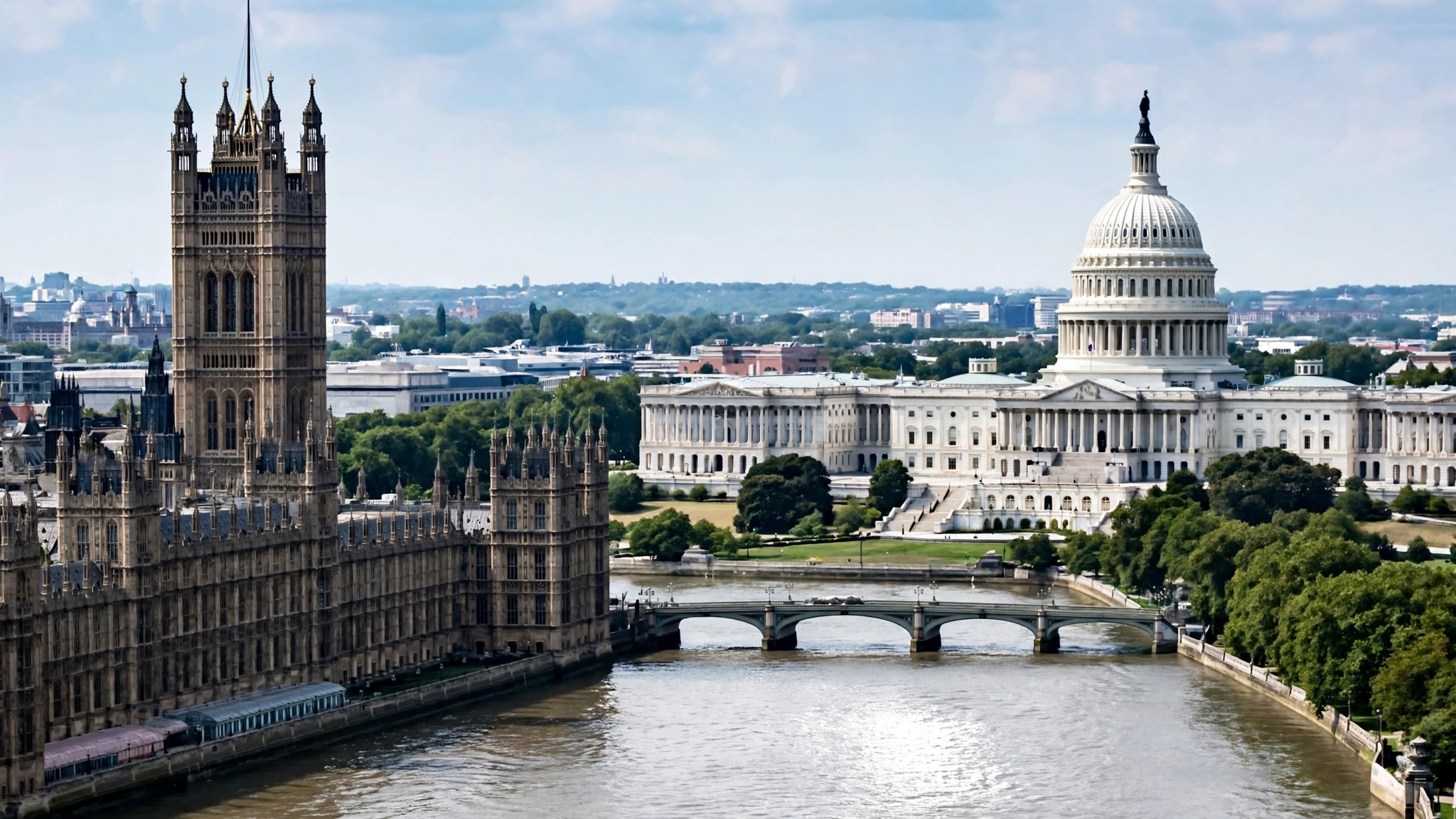
The Difference Between UK Parliament and US Congress at a Glance
If you have ever wondered what the difference between UK Parliament and US Congress really is, you are not alone. Both appear in the news almost every day, and both sit at the heart of how their countries are run. But they are built in very different ways. Parliament grew slowly over hundreds of years inside a monarchy, while Congress was designed from scratch in the 1700s for a brand-new republic.
What the Two Bodies Are Made Of
Parliament has two chambers. The House of Commons is the powerful one: its 650 members, called MPs, are elected by the public in local areas known as constituencies. The second chamber, the House of Lords, is not elected at all; its members are mostly appointed for life. The Lords can question, improve and delay new laws, but in the end the elected Commons has the final word.
Congress also has two chambers, but both are elected. The House of Representatives has 435 members who represent local districts, and the Senate has 100 members, two from every state, however big or small. Unlike the Lords, the Senate is extremely powerful: a law normally needs the agreement of both American chambers.
Who Leads the Government?
This is the biggest practical difference. In the UK, the Prime Minister is not chosen in a separate national vote. Instead, the leader of the party that wins the most seats in the House of Commons becomes Prime Minister, and he or she sits inside Parliament alongside the other MPs. If the Prime Minister loses the support of the Commons, the government can fall.
In the USA, the President is elected separately from Congress, in a separate national election. The President is both head of state and head of government, runs the country from the White House, and does not sit in Congress. This separation of powers means Congress and the President can be controlled by different parties, and they often argue, compromise or block each other’s plans.
The Head of State Is Different Too
In the UK, the head of state is the monarch, currently the King. The monarch’s role is now mostly ceremonial: new laws receive Royal Assent, but real political power sits with the elected government. In the USA, there is no monarch. The President combines both jobs, acting as the public face of the nation and the person who runs the government day to day.
Elections and Terms Work Differently
British general elections must happen at least once every five years, but the date is flexible and can be called earlier. American elections, by contrast, run on a fixed calendar that never moves. Members of the House of Representatives serve two-year terms, Senators serve six-year terms, and the President serves a four-year term and can only be elected twice. Americans therefore vote far more often, including mid-term elections halfway through a presidency.
How Laws Are Passed
In the UK, most new laws are proposed by the government itself, debated in both chambers, and usually pass because the governing party holds a majority in the Commons. The process can be quick, sometimes a matter of weeks. In the USA, bills must survive votes in both the House and the Senate, committees in each, and then the President, who can sign or veto it. Congress can override a veto, but only with a two-thirds vote in both chambers. This long road is deliberate: the system was designed with checks and balances to stop any one part of government becoming too powerful.
Key Takeaways
So, the difference between UK Parliament and US Congress comes down to design. Parliament mixes an elected Commons with an appointed Lords, fuses the government into the legislature, and works alongside a ceremonial monarch. Congress is fully elected, stands separate from a powerful President, and was built to slow decisions down and share power. Both systems have strengths and weaknesses, and each reflects its country’s history. Whichever one you follow in the news, knowing who sits where, and who can block whom, makes the headlines far easier to understand.
